
A Ride Around My Friendly Neighbourhood
Horror has been my favourite genre for a long time. The immature part of me has always enjoyed the shock and gore, but these days I like to see it more as a proving ground for new directors thanks to its formulaic structure leaving room for personal flair to shine through. Despite loving to watch and read the genre I’ve never understood how people enjoyed playing it. The interactive aspect of it just ravages my anxiety, when I usually play games for comfort.
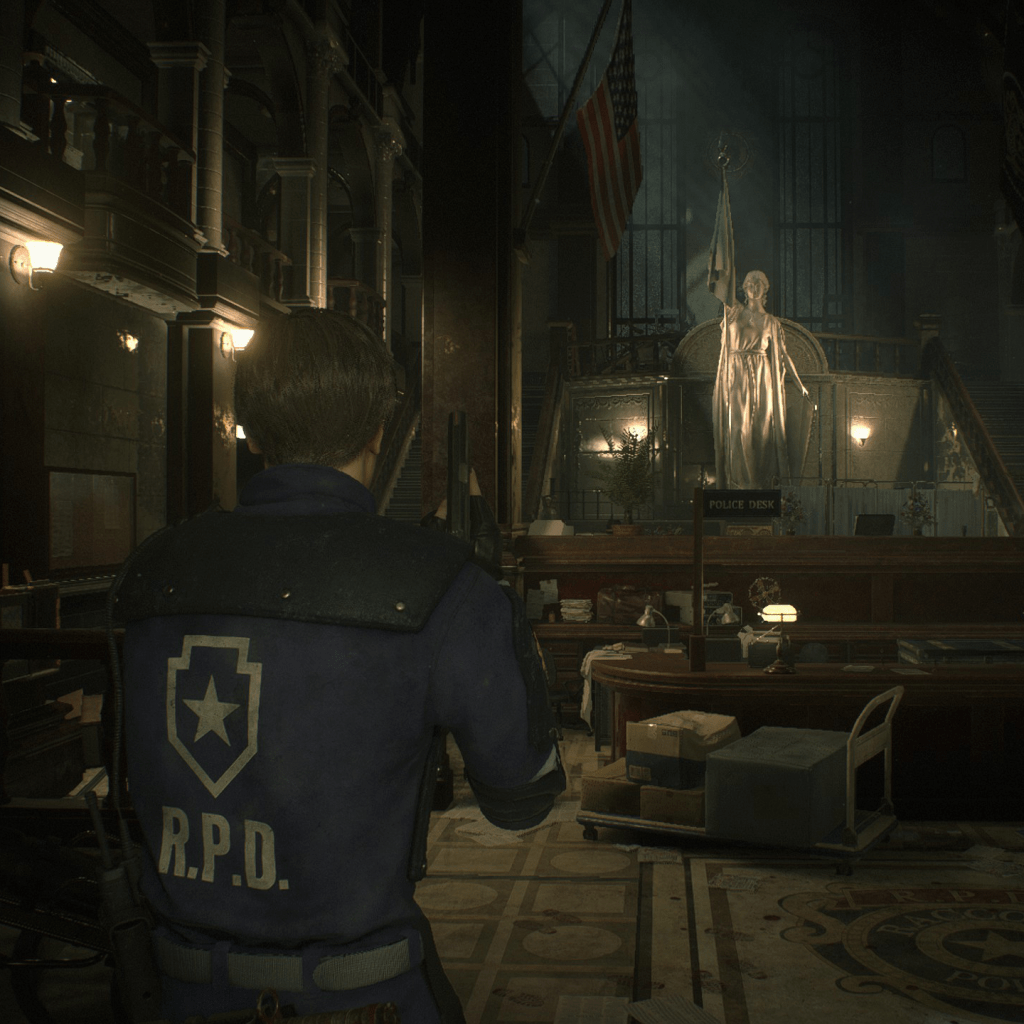
In spite of this when the Resident Evil 2 remake came out in 2019, I was enticed by its legacy and trailer, and decided to give it a chance. That enthusiasm didn’t get me far. For all of it’s scares and gloomy atmosphere, it ended up being the inventory management and finite supply of items that I had hardest time with. Unwilling to walk away embarrassed after another wasted purchase, I cheated and gave myself unlimited health and ammunition. I had effectively transformed Dawn Of The Dead into Rambo, entirely subverting the tension and anxiety on which horror thrives. It wasn’t what the developers or designers intended, and I’ve been quietly ashamed ever since.
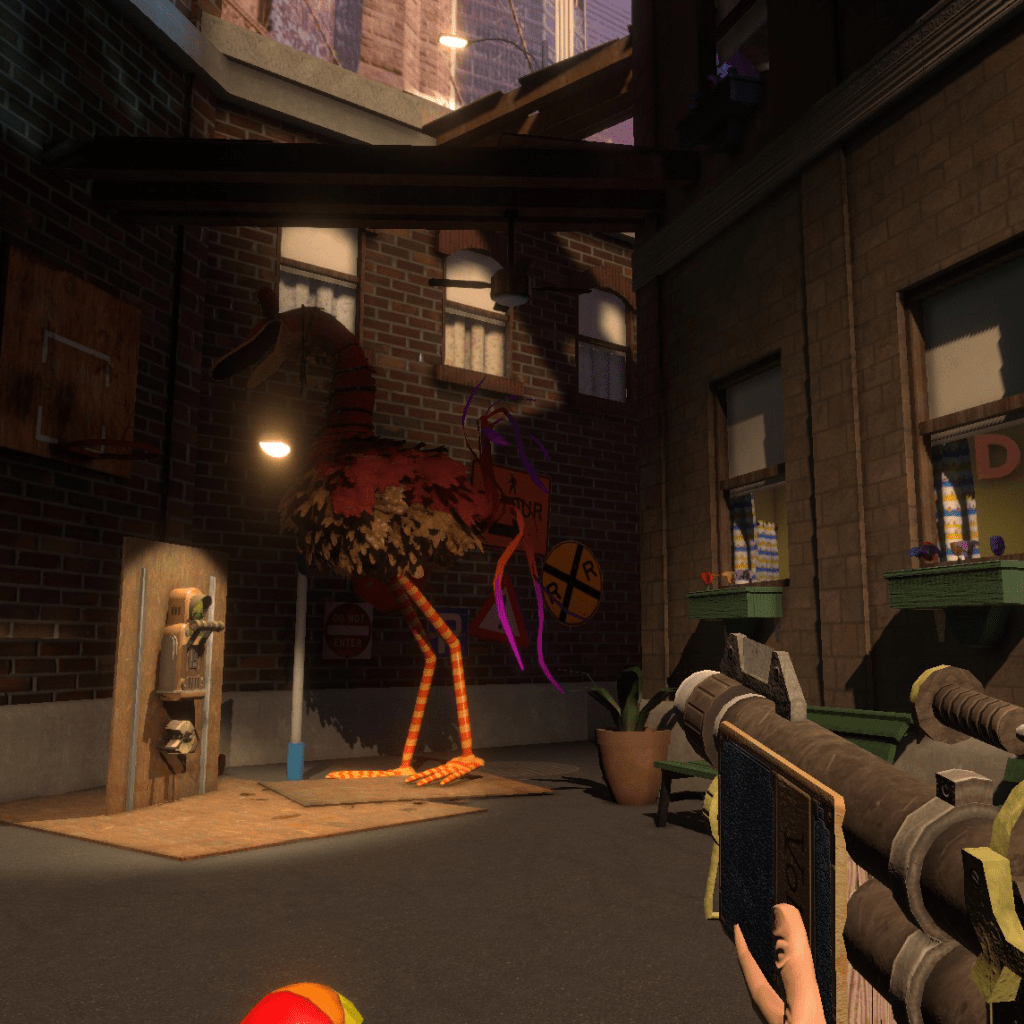
A few years later I stumbled upon what seemed to be an oddly effective mashup of Sesame Street and Resident Evil. I found the concept so inherently hilarious that I was compelled to share it with my partner. She was enamoured, and begged me to play it that night so she could watch. I explained my apprehensions around horror games, but she assured me that her company would make it feel like we were simply watching a scary movie together. I’m glad she pushed me to give it a go, because My Friendly Neighbourhood was such an enjoyable experience that I left it with an understanding of the appeal of the genre.
Even while trading the typical haunted mansion for a cancelled kids’ television show set and making sweeping thematic changes to the well established formula, it doesn’t stray too far from the staples of the genre. There are limited amounts of health-restoring items, and saving still requires a finite collectable resource. The difference is how generous My Friendly Neighbourhood is with these. They’re not abundant, but if you play carefully you’ll have plenty. Similarly, the game is still laden with jump-scares and even occasional body horror, but when juxtaposed with this vibrant and nostalgic environment it was so much easier to release that tension once you were safe again.
Looking back, I’ve come to think of My Friendly Neighbourhood as my training wheels for the horror genre. It was a beginner-friendly entry in an established genre which eased my intimidated self into the more unintuitive traditions and tropes which its audience enjoys. Prior to my time with My Friendly Neighbourhood, I found this form of inventory management to be an arbitrary stressor in an already hostile environment. I now enjoy the tetris-style rush so much that I tracked down a puzzle game that mimicked it (Save Room by Fractal Projects for those curious). I also began to enjoy that nerve-wracking sensation when you’re unsure if and when you’ll be able to save. I had always thought it strange that horror games are commonly designed with replayability and even speedrunning in mind. After all, I didn’t even want to play it once, why on earth would someone want to go for a second round? Now it made sense why. I had only just put down the controller and I was already itching to go back in and show the game how much better I had become. I was actually excited to explore this genre I had finally dipped my toes in. That’s what training wheels are supposed to do. Help you past your awkward fumbling phase, so you can just enjoy the ride, and tempt you towards more difficult trails.
Taking A Detour Through Another Crab’s Treasure
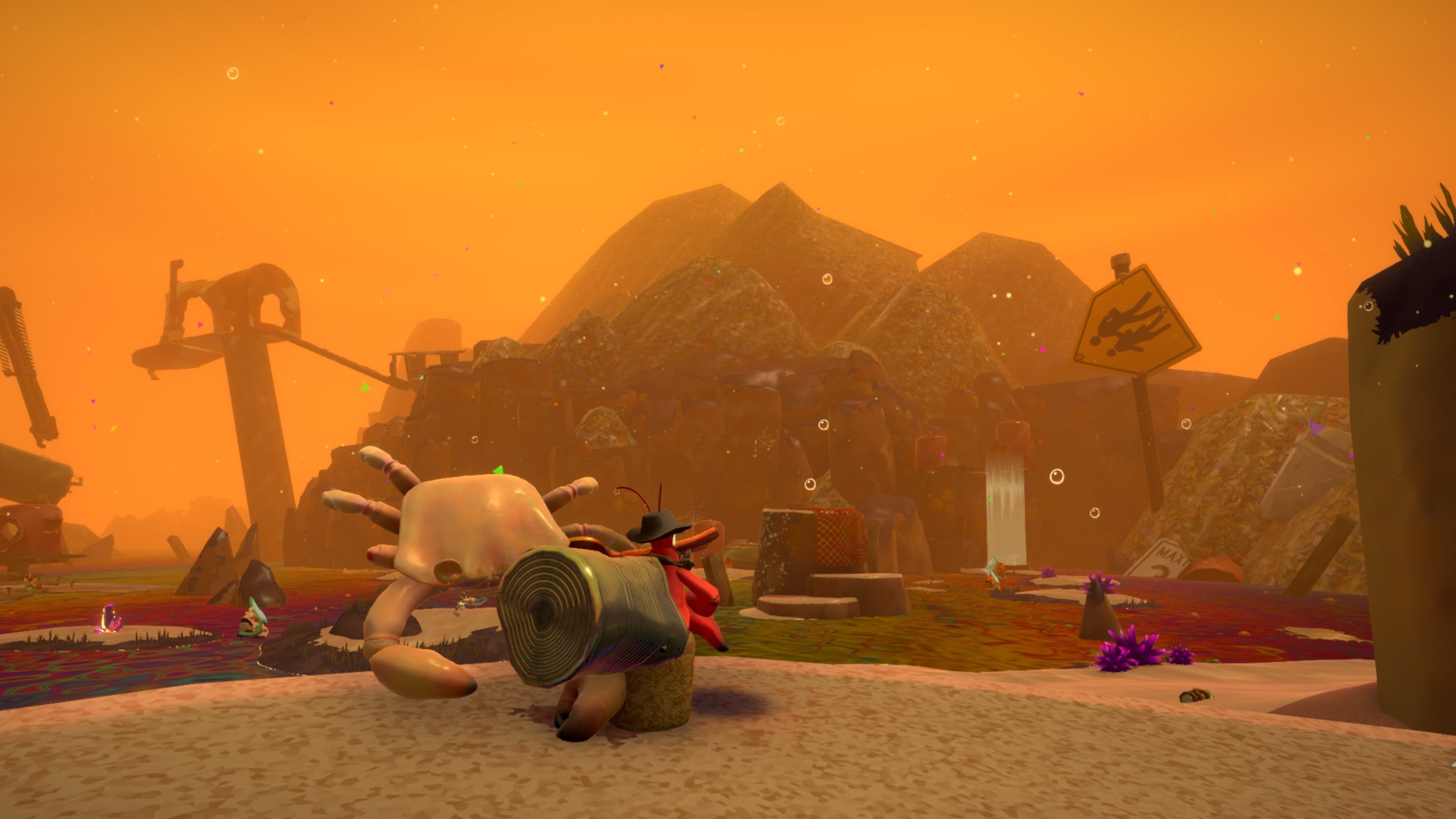
You might think that with all of the games I’ve played over the years that I would have gained some proficiency at playing them. Reality is, I’m actually still quite rubbish at them. That’s never really been an issue for me, I beat most titles that I enjoy, just at a more leisurely pace. There are a few genres that this laissez-faire mentality doesn’t work well for. Horror is a good example, given that it’s most common punishment for failure is losing real-world hours of progress. After all, there’s nothing more horrifying to the working man than unpaid labour. A similar example would be soulslikes, a genre of infamously difficult and bleak action games drawing inspiration from the Dark Souls series. Dying in these doesn’t cause you to lose hours of progress, but instead can conjure the mental image of an impassable wall in between you and the rest of the world. Each subsequent death another brick in this wall. For someone admittedly unskilled like myself, I didn’t feel that trying to scale this wall was worth the time nor effort. I didn’t see how people could enjoy this. That was until I played Another Crab’s Treasure.
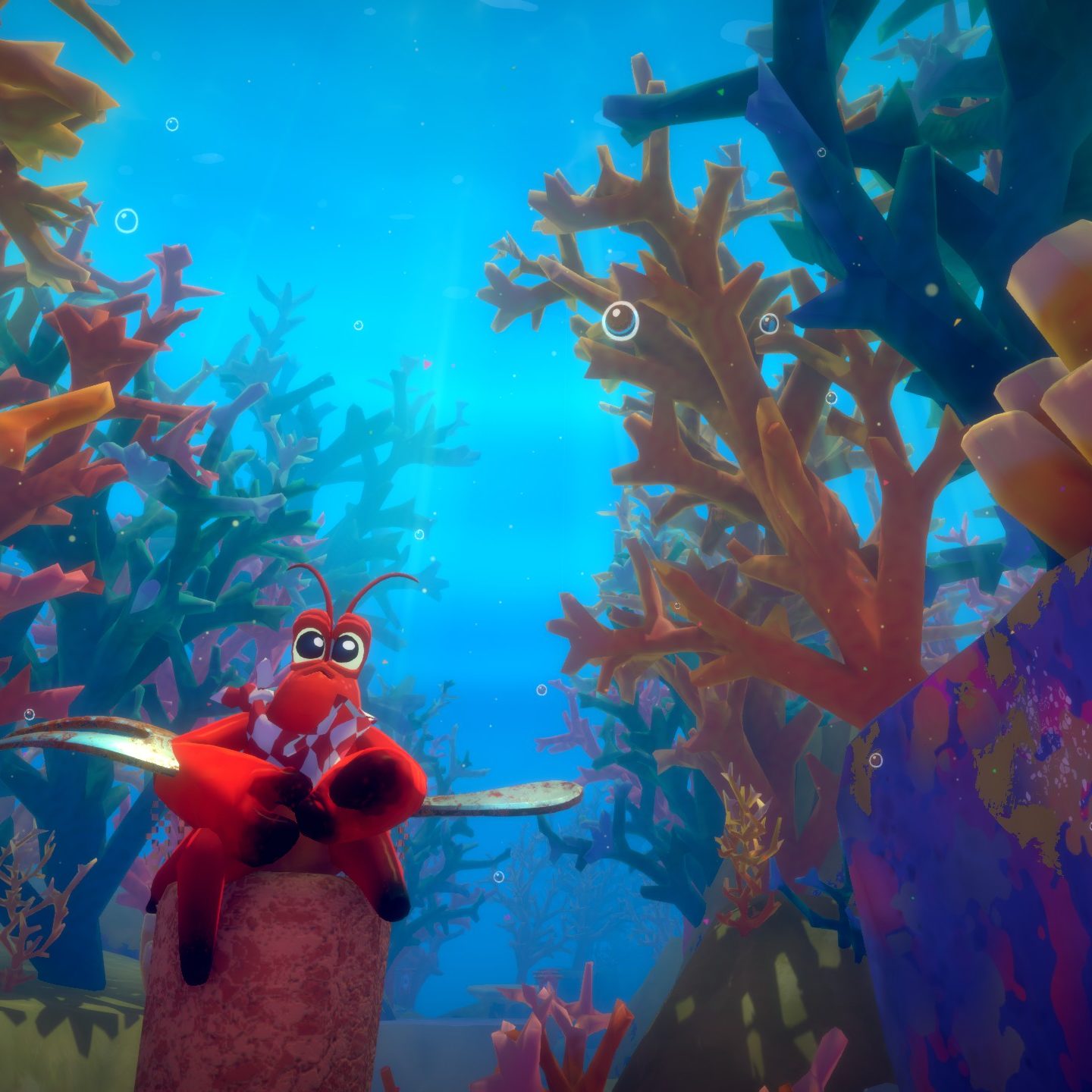
Made by Aggro Crab, a studio whom I’ve come to adore, Another Crab’s Treasure is a stylish title that trades Dark Souls’ dire world for a fantastical imaginary one in which some unseen species has filled the ocean with microplastics and waste and, where rampant greed has corrupted the government into ignoring it. What a concept. I was initially apprehensive to play it due to it being a soulslike, but it ended up being the perfect game to help me understand them. Every misunderstanding I had felt like it was addressed in some way. I mentioned earlier that I’ve played a lot of games, but not actually gotten much better at them. That’s something of a half-truth. Everything you interact with builds a little more intuition. But some genres are so unique and distinct that your preexisting intuition won’t help you. You will instead be at the mercy of the game’s tutorialisation. Not how it teaches you how to control the game, but rather how it should be played. Where Dark Souls’ early stages didn’t give me the proper understanding of what to expect, Another Crab’s Treasure introduction gave me a masterclass in ‘soulsology’.
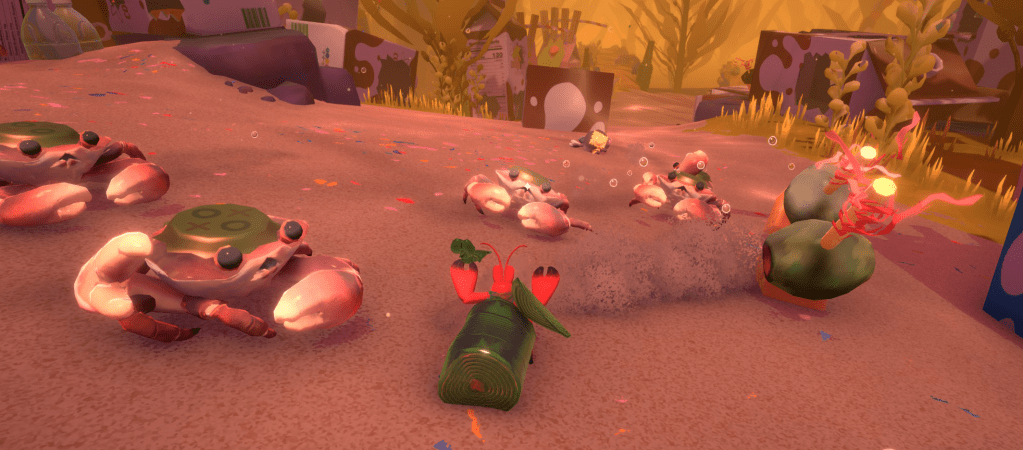
The first area, Slacktide, functions as a sort of microcosm of the game as a whole. Yes it teaches you the basic controls, but also subtly builds your intuition for how the world works and how you should think. For example, through the plethora of hidden items around the map, you learn that exploration is encouraged and well-rewarded. When you stumble upon the menacing executioner The Royal Shellsplitter idly roaming a field off the beaten path, you understand that some bosses are optional. After dying a few times while trying to pass through a maze-like area brimming with hostile lobsters, you realise that it’s not always worth engaging every enemy you see. All of these little lessons compound on one another and leave you with an exceptional understanding of what to expect, and the mental tools to resolve the unexpected. Even the loading screen tips can act as a north star for lost crabs to adjust their course. My favourite one, purely for how much it contains while staying concise, is as follows:
A pristine shell is a sign of a coward! Let your shell take some hits for you, and wait for the right moment to strike. There’s always another one nearby.
This leads me to talk about combat next, and how Another Crab’s Treasure adjusts it for first-timers. When I played Dark Souls, it took me far too long to understand the importance of learning and predicting enemies’ attacks. I relied on my experience with other action titles, not realising how distinct the combat was from these and thus failing to adapt. Compared to the frenetic chaos of a beat ’em up, or the slick movements of a hack n’ slash, Dark Souls is a lot more patient and precise. With the devastating damage your opponent’s teeth, claws, and “Just-Add-Water Growing Dinosaur” projectiles can do, you can’t afford to rush in all willy-nilly. Your attention needs to be focused on figuring out your opponent’s intent and reacting accordingly, almost instinctually. As that tip implied earlier, Kril, the hermit crab protagonist, is a very defensive and enduring character. While hiding inside your makeshift shell, be it a soda can or whatever else you find in the junk pile that is the seabed, you’re afforded time to slow down and admire the design of the world and its inhabitants.
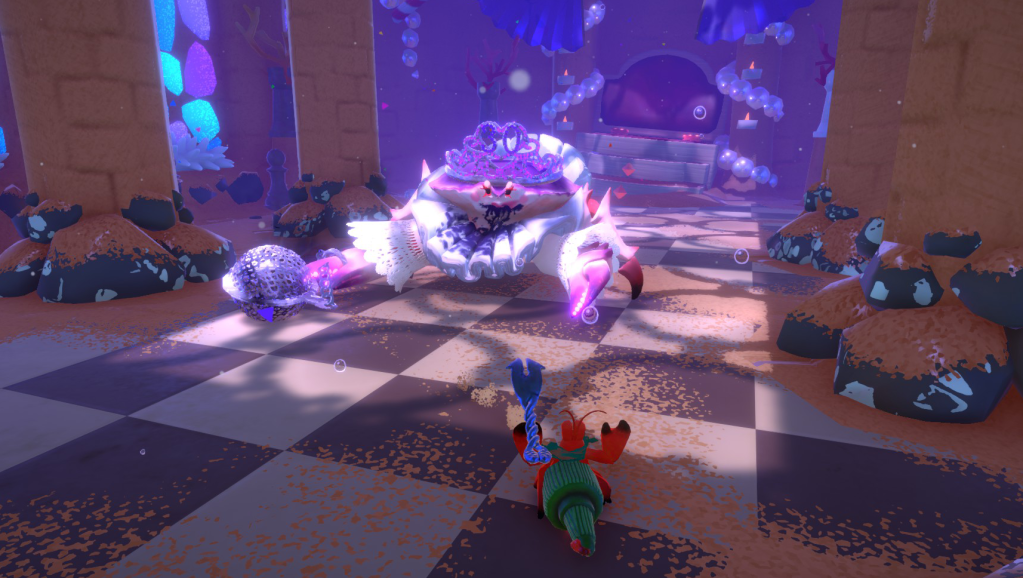
A majority of the ocean’s polluted combatants can be divided into categories, such as the standard infantry crabs or ranged seahorses. Each of these groups has a small pool of well telegraphed attacks, which makes it easier to learn what to expect from a new enemy by their design alone. Harder members of each species will act similarly, but with a fun twist. You might encounter a crab who has studied the ways of the blade, and now has new attack patterns and timing to learn, maybe even a special move. Or perhaps that seahorse has now been bleached pure and clean by misplaced chemicals, and now seeks to inflict a status effect which robs you of your specialties. Whatever it is that you encounter, you’ll have a strong foundation that gives you expectations off of visuals alone, while still leaving room for fun surprises.
Another benefit of these well-telegraphed animations is that parry-timing, a concept that I have personally had a lot of difficulty with, becomes far easier to understand and execute. This comes in especially handy for the game’s boss fights. The final boss of this first area, Magista, Tyrant Of Slacktide, functions like a knowledge-check for the player. Almost to say “If you cannot defeat me, you are not ready to pass me”. It can be a tough battle. If you fail, you might reconsider your stat allocation or your equipment. Maybe you had misjudged an attack or reacted poorly. But even at this point, the game does not want your failure to be punished, it simply wishes for you to learn from it. For every boss in the game there is a temporary respawn point offered right outside of the encounter room, with no penalty or strings attached. If you feel you nearly had it, or you understand what you did wrong, try again. There is no walk of shame from the last bonfire, past dozens of undead trying to take away what little life the game allows you to have. Another Crab’s Treasure is just glad you’re learning.
Deciding To Remove The Training Wheels
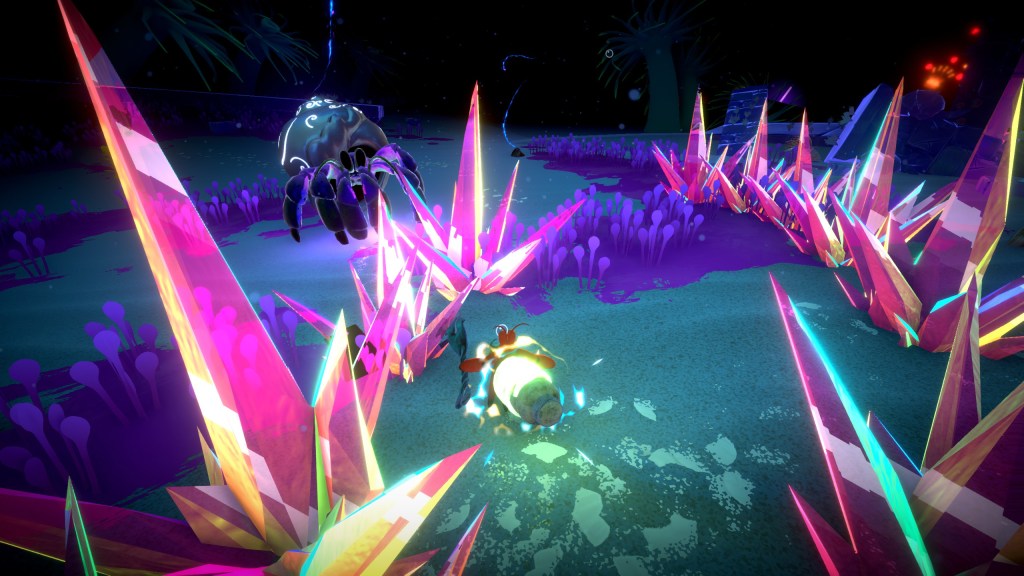
Another Crab’s Treasure helped me understand that joy of overcoming, which soulslikes aim to evoke. They give you a hard challenge without assistance, so your victory belongs only to yourself and your growth. You can take pride in beating them. By the time I reached the final boss and was nearing completion, I had done everything. Fought every optional boss, scoured for every remaining pickup and treasure. I had even completed all of the boss rushes, something I have never found interest in before but thoroughly enjoyed in this. When I dealt the final blow and saw credits roll, I was left with a strange feeling. I found myself wishing that it’s final moments had been more challenging. Not a sentiment I was used to.
Thankfully, Aggro Crab included a New Game+ mode that becomes available once you have beaten the game. Not your typical affair where enemies are made arbitrarily stronger and bulkier, with no added challenge beyond the new war of attrition. They had actually gone to the effort of revising enemy types and combinations for every location in the game. Not only were your enemies deadlier, you now faced the difficult ones much earlier. Encounters were now being specifically designed to overwhelm you. Ambushes, melee tanks distracting you from ranged death, early-game bosses were now being used like basic grunts. I died in the tutorial with a grin on my face. Another Crab’s Treasure had taught me all I needed to know. The training wheels were off now, and it was time to ride.


 BEEEMEM'S HIVE
Leave a comment