
There’s an undeniable joy in learning about the world around you, yet I’ve always found discovery far more rewarding than instruction. To feel as if I’m hacking my way through an untamed jungle, rather than following someone’s marked nature trail. I get an unparalleled thrill from declining a game’s tutorial or assembling flatpack furniture without a guide. What can I say, I’m a real wild guy.
Thankfully there is a particular style of game design that I adore which scratches this itch. A type that sees developers rescinding their typical offer of a helping hand and leaving you stranded in hostile lands. Often the only way to survive is to observe your environment, and attempt to intuit its rules. To experiment and confirm this understanding, or to dissect your failures and extract whatever valuable information you can from these as well.
Two such titles which share this hands-off design philosophy (and little else) have inspired me to introduce a new segment, in which I discuss two games that share an interesting feature. I hope you enjoy it, or at the very least I hope you’ll forgive me for the cumbersome name. For today’s Feature Double Feature, let’s talk about Samurai Bringer, Primordialis, and Observational Learning!
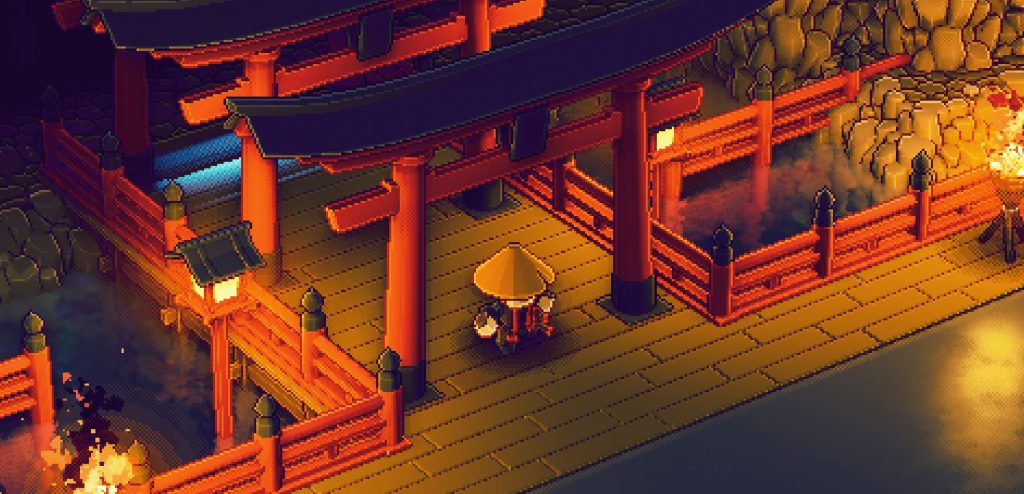
Samurai Bringer
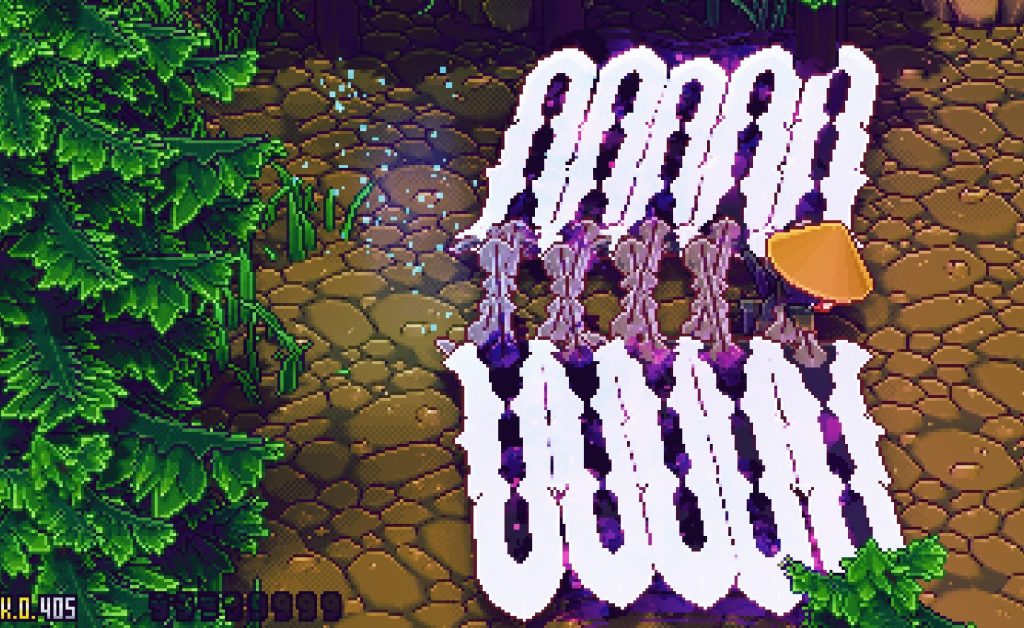
Equal parts beat ‘em up, spectacle fighter, and Dynasty Warriors, Samurai Bringer’s combat has this over the top extravagance executed through simple button sequences. but ‘Spectacle Fighter’ is quite the understatement. Japan’s forces are rendered in a gorgeous pixel art style and dance around the screen performing frankly excessive attack animations. Yet this is just the dazzling style which conceals the true meaty substance of Samurai Bringer. If you are able to uncover and understand it that is.
Its choice to drip-feed you its tutorials rather than front-load a seminar on basic movement and camera controls is not particularly unique. What is unusual however, is the extraordinarily sluggish pace of this drip-feed which almost guarantees that you will surpass its teachings before its conclusion. Aside from a more hand-holding explanation of the action builder, which I will come back to, the game’s traditional tutorials are limited to a small pool of levels between other levels and a seemingly shy mentor.
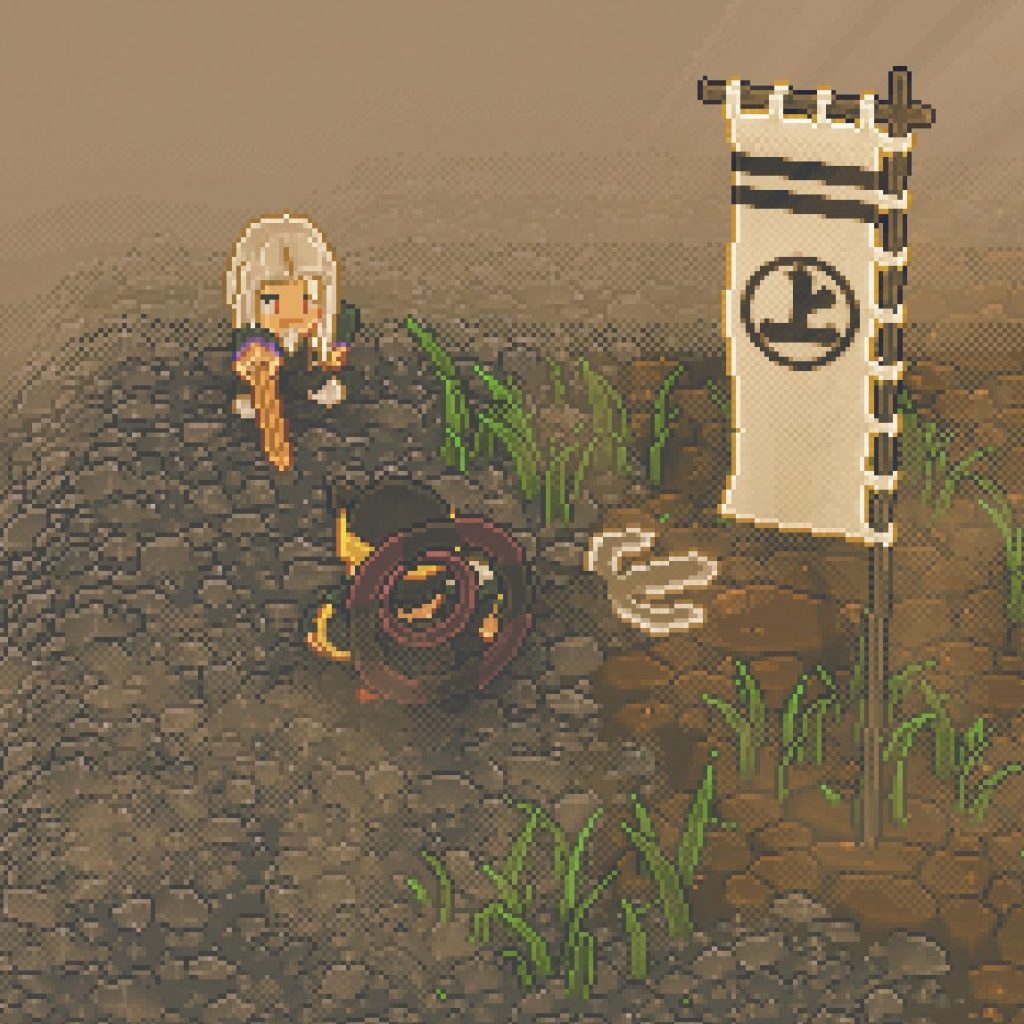
These liminal learning levels are what you might typically expect. Each teaches a single new concept, such as the Inn which can be rested in to restore health, or the Blacksmith which can combine pieces of equipment for a fee. The other far stranger source of information is the Master. The first odd aspect of your tutelage, is that you must actually locate him standing idly somewhere in each level. The second, is that upon doing so he will reward you with… a single tip. This is made even crueler by the fact that, by an unkind estimate, your first twenty or so interactions will teach you either obvious information, or something you had already ascertained hours ago. So obviously, why waste your time with the hassle? Well that’s because, bafflingly, he is the only one who can teach you about the more unintuitive yet crucial aspects of your powers.
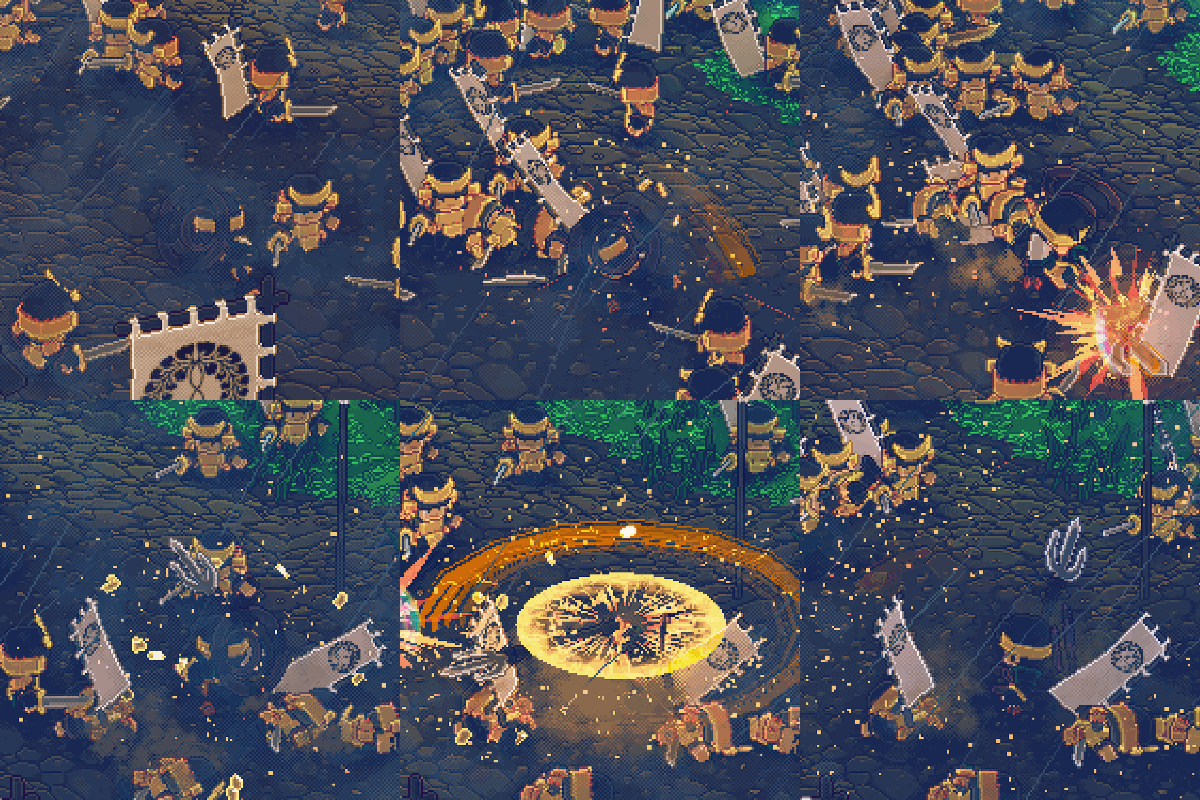
I hope that I’ve now properly expressed how odd the game’s tutorial process is, and can now get into the real puzzle you must solve to master the game’s systems, the action builder. Earlier I mentioned that combat is handled by simple button press sequences, but Samurai Bringer’s twist is that you design your character’s moveset. Simply put, each button can be loaded up with a series of attacks, which are in turn each built up of techniques. Techniques, which are dropped occasionally by slain enemies, can change the type of action you perform, increase its damage, or even add a variety of effects such as AOE or elemental damage.
While I could go on endlessly about the secrets and discoveries to be made within this system, I wish for those interested to experience it for themselves. After all, the game’s I enjoy the most are those which continually surprise and reward me in unexpected ways, it’d be unkind of me to rob you of that joyful opportunity. To that end, I will aim to spoil as few lovely surprises as possible, and instead tell you about the way the game’s own challenges and unlockable characters hint towards the system’s inner workings.
Amassing technique scrolls to create longer or stronger movesets is one of the primary forms of meta-progression in this roguelike. It functions almost like experience points in an RPG, a constantly accruing background resource which ensures you are continually growing. The other main form of progression is the completion of challenges, which can reward you with a variety of small but valuable permanent stat increases. While a few of these can be achieved through natural play, the far more interesting ones make curious requests of you. Reading through the challenge list, you can’t help but ask yourself questions. Why does it want me to stack twenty instances of a particular attack, does that do something special? Why does it give a special name to a combination of two particular support skills, does it have a different effect? What exactly do the Summon or Vampire equipment abilities do? These challenges leave questions lingering in your mind, hinting at unexplored systems. Your own curiosity inevitably leads you to become stronger.
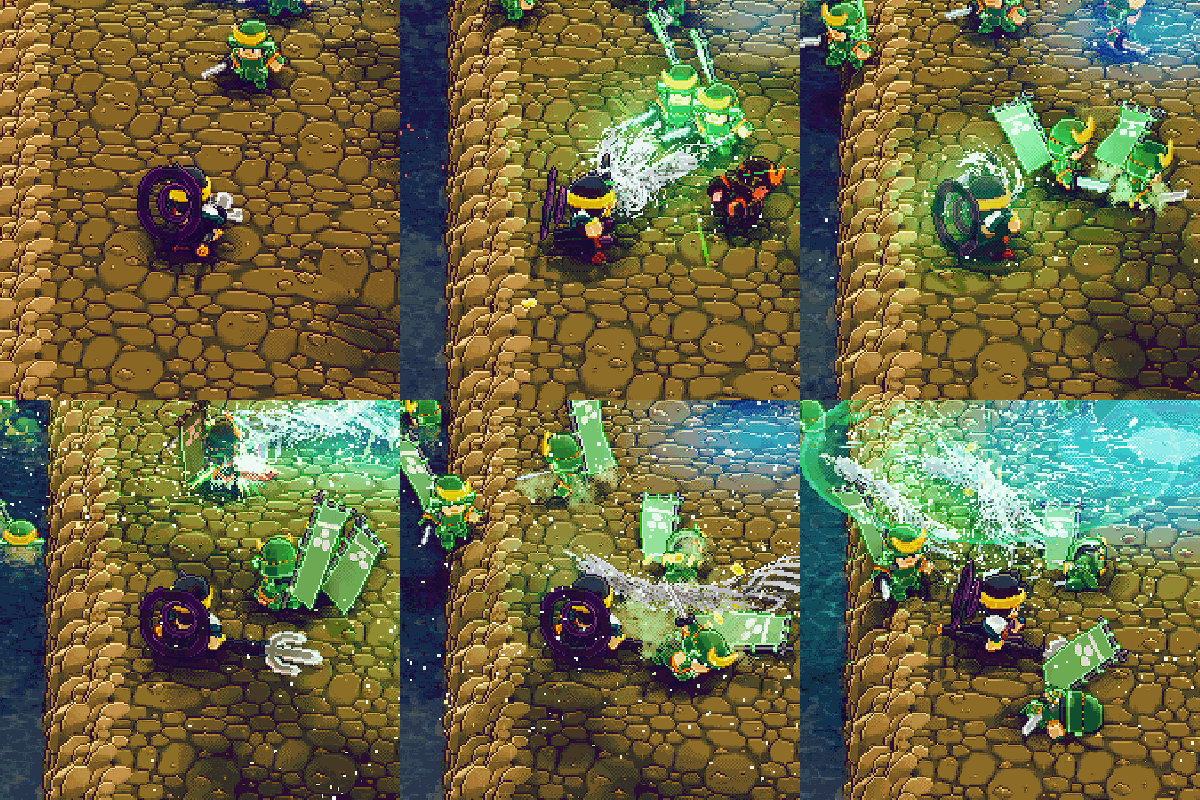
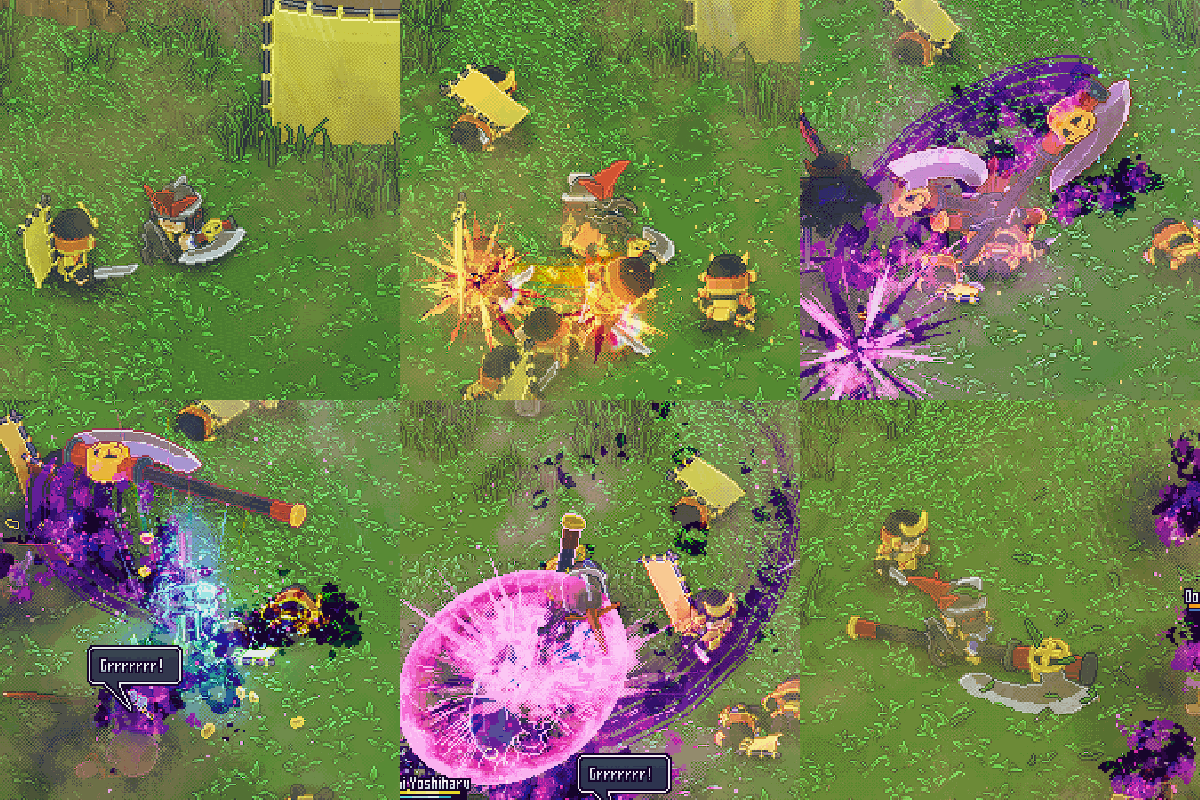
The final form of progression is not found in the character, but in the player. Frequent experimentation and keen eyes allow you to learn and condense a wealth of information into a feeling of full-blown mastery. But this does not happen without that aforementioned curiousity. Fret not, Samurai Bringer has another type of fuel to throw on your motivational fire to keep you invested and asking your own questions. Envy.
Every human character in this world uses the same toolset that is available to you. Every infuriating, screen-shaking, world-demolishing attack that you suffer is one that you too could theoretically perform. If only you could figure out the recipe. Many times a solid run would be ruined for me by one utterly catastrophic attack that I hadn’t even thought was possible. Each time I resurrected, a simple question echoed in my mind? “How the hell do I do that?”
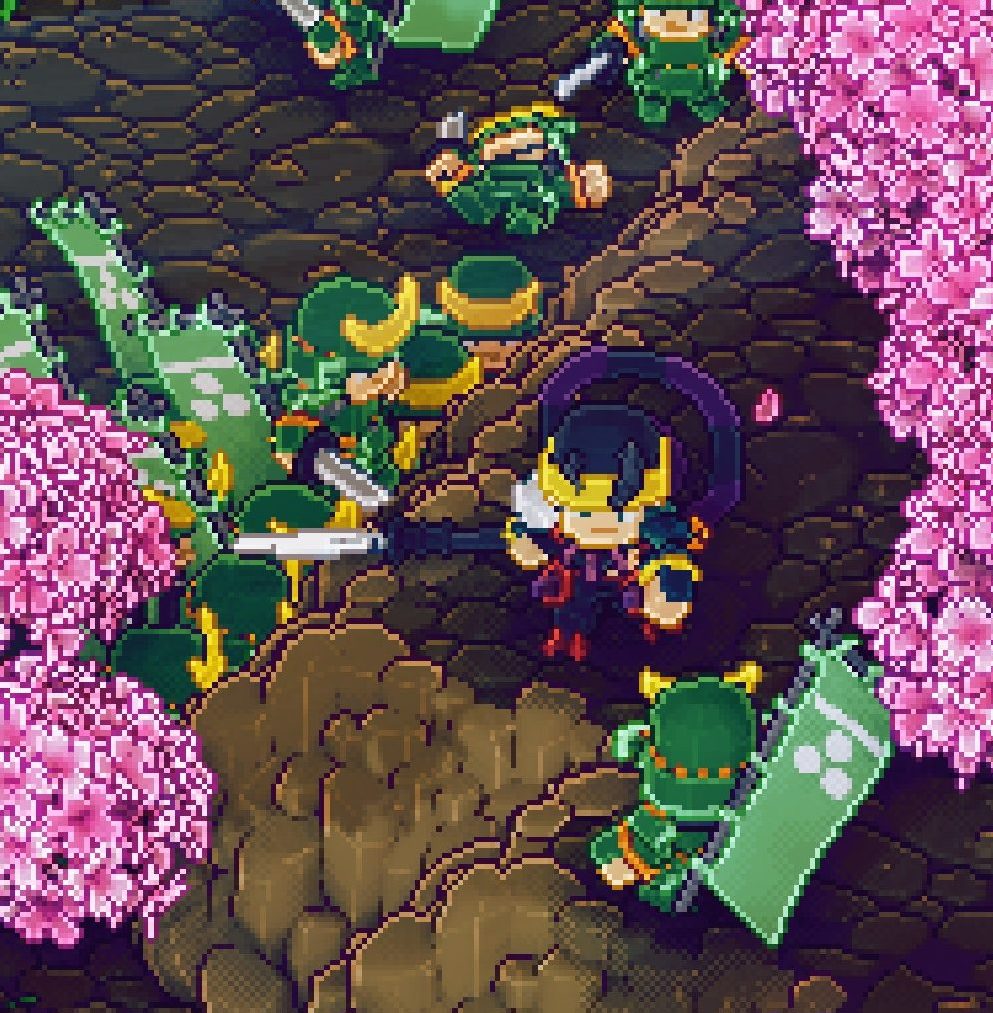
With effort and patience you may be able to isolate key elements of the signature move you’ve come to covet. Did they just leap? Did that seem more like a slash or a thrust? Could this be unique to that weapon? If the effort feels futile, if you can’t extract anything valuable through observation, there’s always one option left available to you. Overcome them, and make them yield their secrets to you by force. Even the skills you have risen above can still teach you something new, if you’re willing to learn.
No defeat is a failure, as long as you learned something in the process.

Who’s it for?
Fans of Bayonetta or DMC who are cocky enough to think that they could design better flowing attacks.
Is it for beeem?
Designing my own moves with animations this expressive, and drowning in eureka moments? Uh, yeah, this one’s a banger.
What feeling does it evoke?
Your power grows so exponentially you feel like the unstoppable force, just hoping you won’t be humbled by the immovable object.
What’s the caveat?
While a bit kitsch the downfall of the music is that its in limited supply and little variation. While observational learning is the whole idea today, I do think the lackluster tutorials here could be a massive turn off to those not willing to explore alone.

Primordalis
After painstakingly designing and evolving a small aquatic creature you send it into an inhospitable world, and Primordialis flashes an evil grin as you watch it be torn to shreds by an abyssal nightmare. Samurai Bringer’s shared combat system evoked a feeling of equality between its protagonist and enemies. Primordialis uses a similar system but with a contrasting intent. It almost states, “You aren’t on a level playing field, you’re in an unsympathetic ecosystem”.
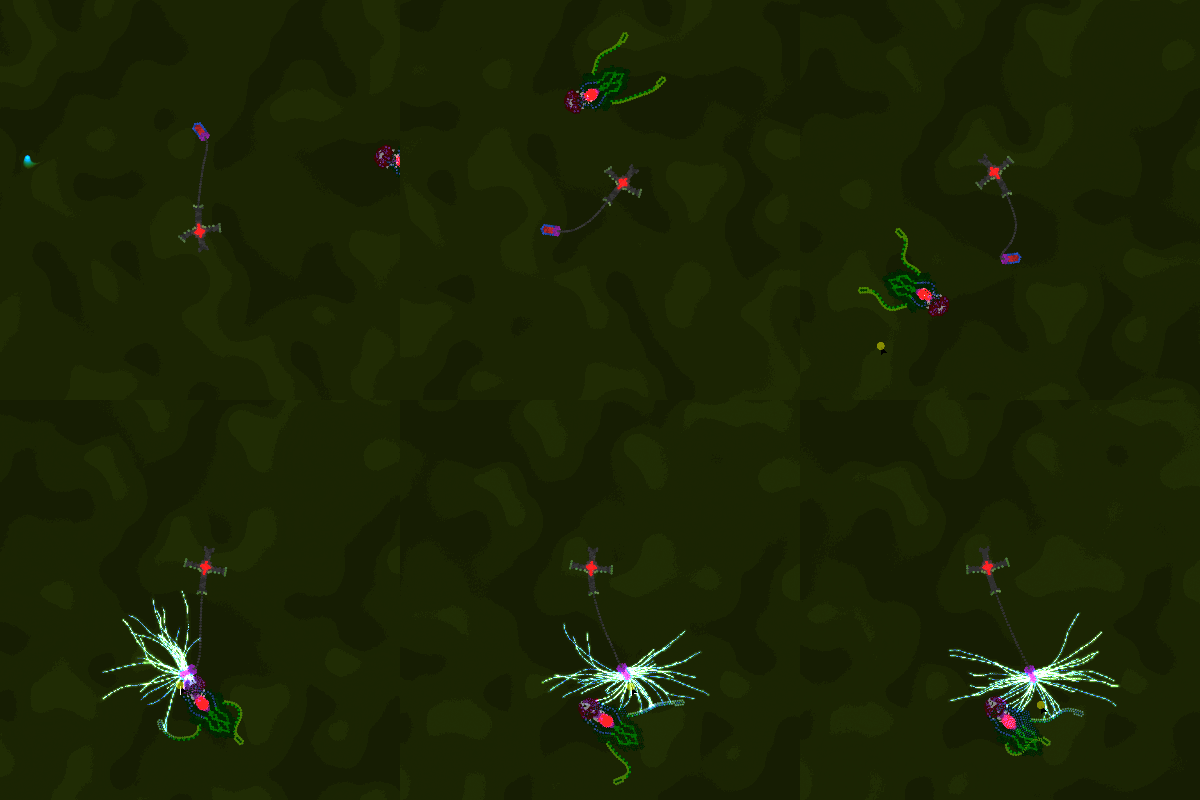
As your pitiful fish traverses the wide ocean and its barricaded biomes you’ll encounter a plethora of distinct creatures, ranging from meek guppies to colossal giants. Some will blindly chase you to their own peril, while others lay traps or strike from afar. This biodiversity here is so rich that some aren’t even single entities, but a hivemind swarm of them. The very first lesson you learn is that you need to find your place within this ecosystem, or you will become prey to all of it.
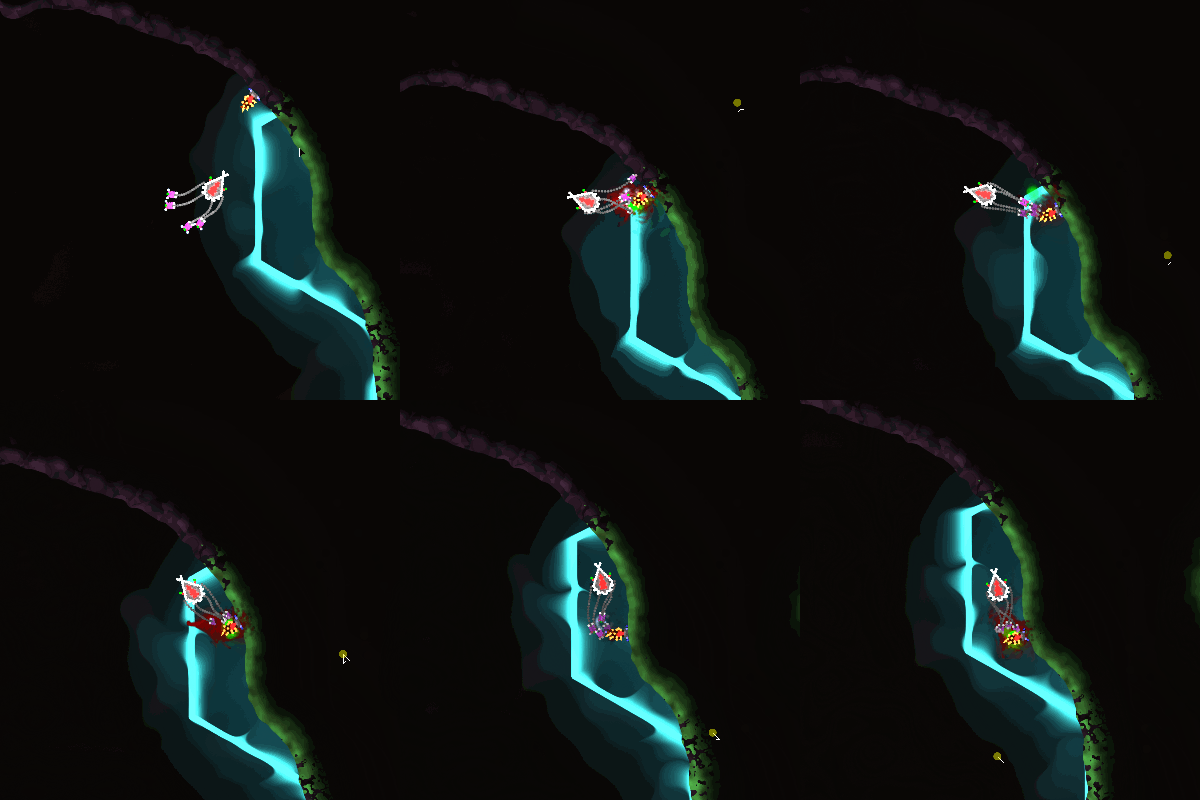
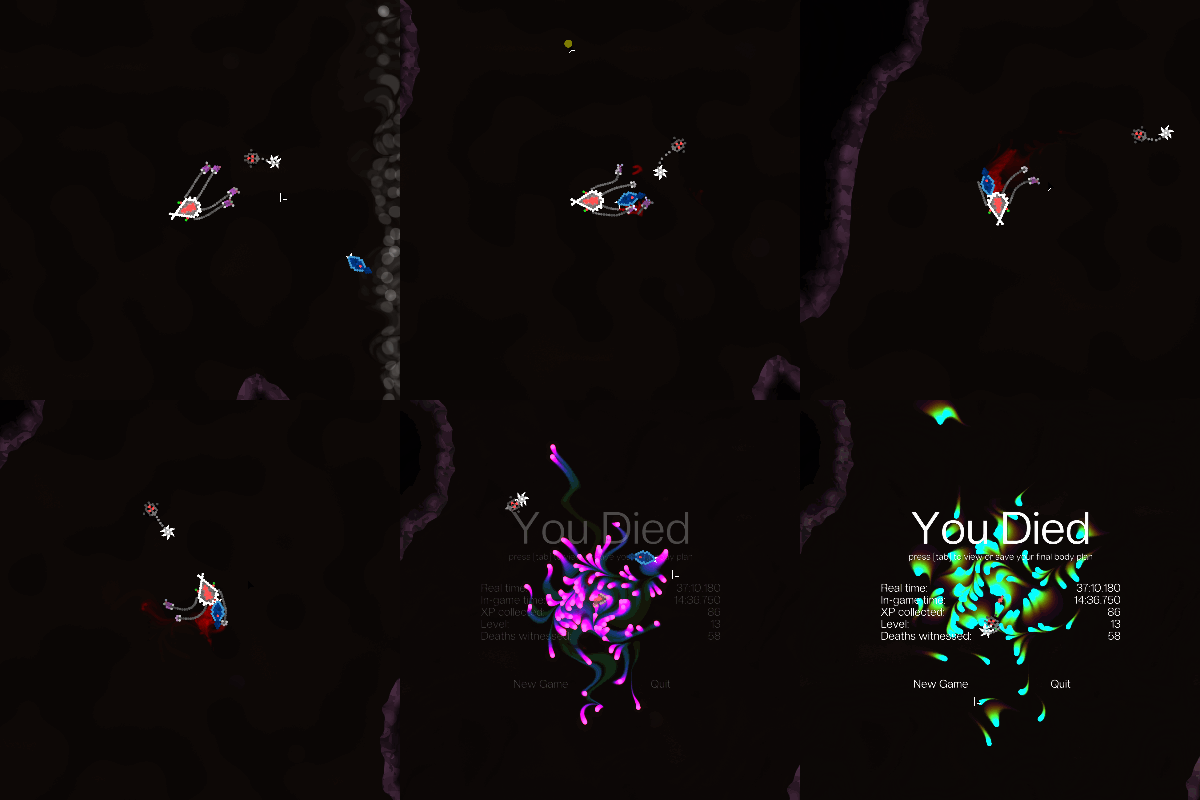
In a flash you can be torn apart, poisoned, trapped, electrified, or even simply explode. It’s only through observing the habits of your assailants that you can have a chance at surviving these cruel waters. Once you grow accustomed to the wildlife of an area and can study them without meeting your end, it becomes fascinating to see what their bodies are actually made of. How they’ve chosen to live, or how they fight for that opportunity at least. In the first area alone the variety is stunning. A balled up vinelike creature bounces off walls and anxiously explodes upon meeting you. A peaceful sea snail roams the walls aimlessly, taunting you with an impenetrable shell. Even a mighty shark who can regenerate from most encounters, and launches his jet-propelled jaws to chase after those who foolishly think they’ve escaped his reach.
In most games there isn’t much of a point to analysing the very organs that make up your foe, but here there’s a great benefit to this fearful scrutiny and biological examination. It helps inform you of what is possible through mastery of Primordalis’ unintuitive and clunky hexagonal interface.
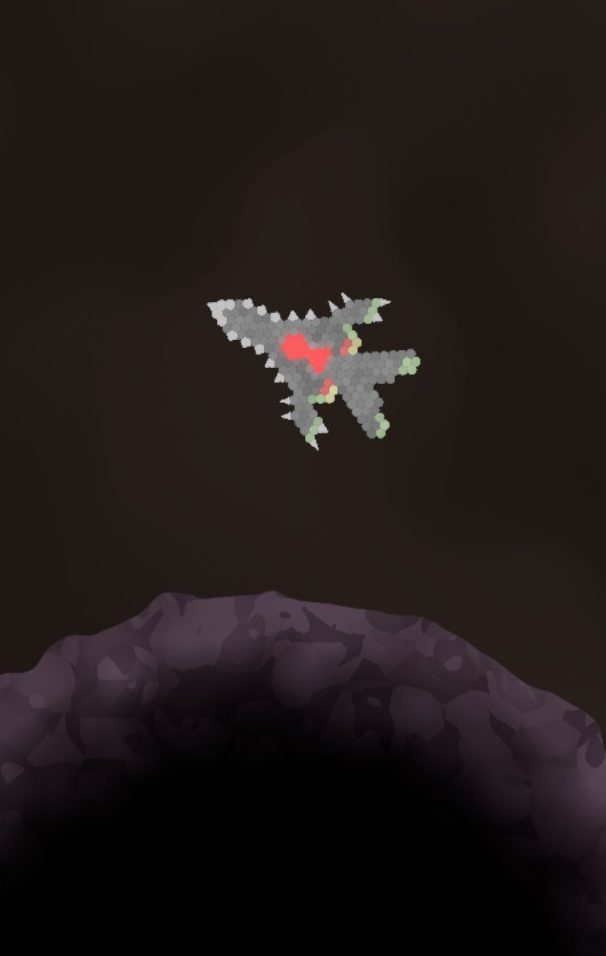
At any time, regardless of the obvious danger that surrounds you, you may open the design canvas for your creature. On a blank hexagonal grid you paint the shape and features of your new species, your colours representing the different types of cells you have acquired. Initially only basic concepts will make sense in this strange new art form, such as special cells requiring a power source in order to activate their corresponding ability.
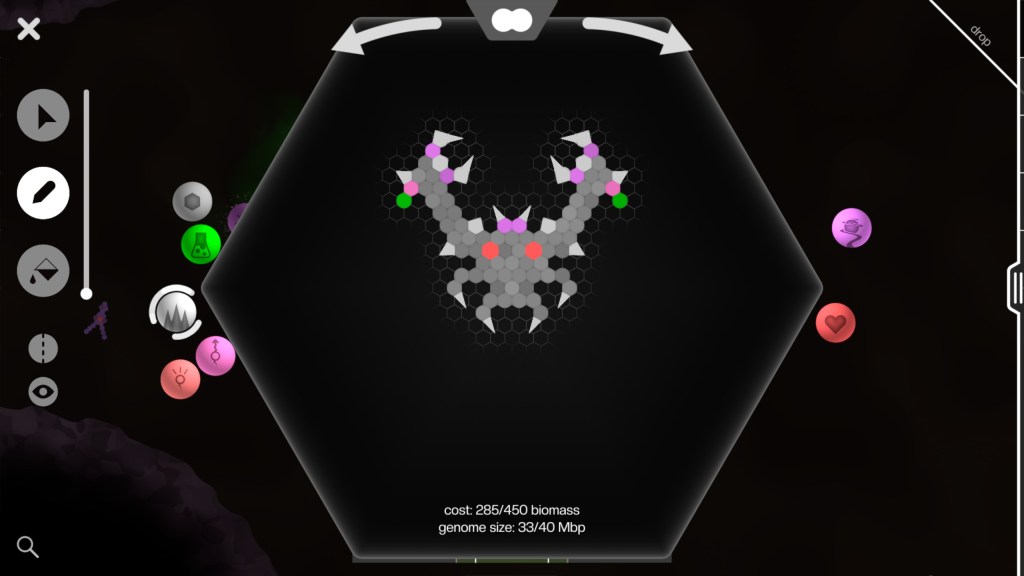
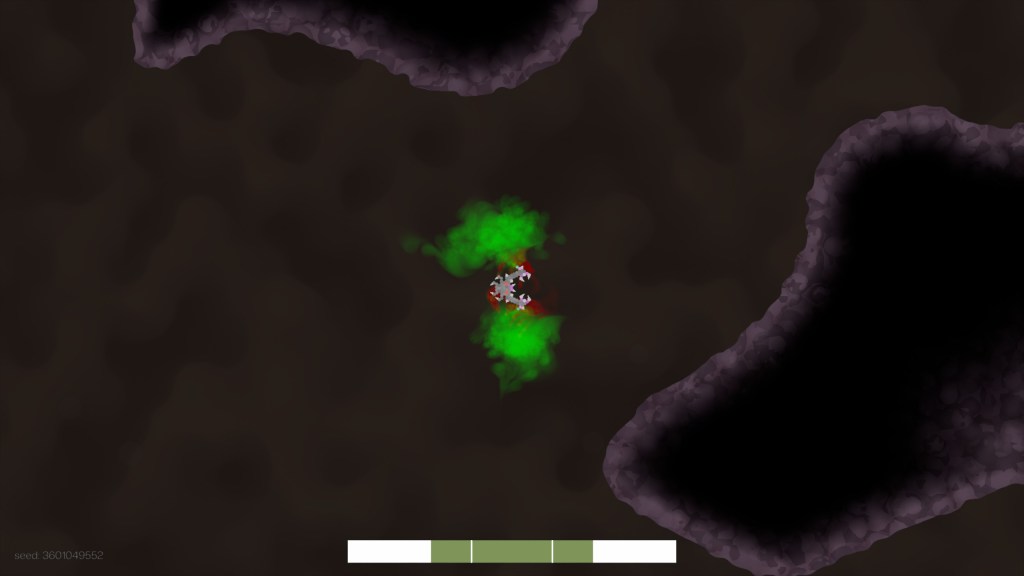
This learning curve is made even steeper by the fact that new cell types are discovered randomly through the world, and lost upon your inevitable death. This hard reset causes each new creature’s life to feel like a true evolutionary struggle for survival. In the same way that avian bones became hollow in their pursuit of flight, often you must make sacrifices when pursuing the powers or forms that you believe will finally allow you to conquer your environment. As often as experimentation will reward you with newfound strength, it will also result in an unexpected weakness.
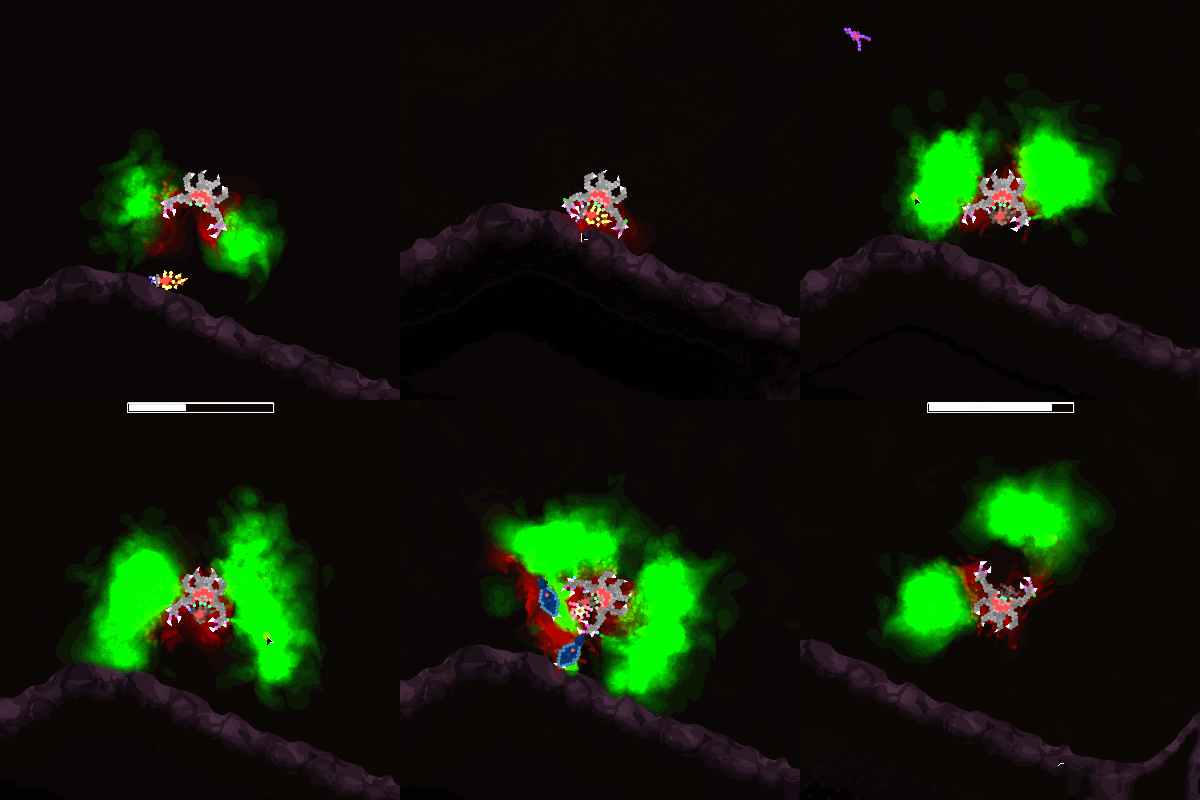
If it is so deadly to play with new concepts, then how is one supposed to learn this obtuse system? It’s simple, and today’s feature after all. Observational learning. Earlier I mentioned finding fascination in watching how other creatures moved through these waters, how they had chosen to survive. The primary reason I can still remember these strange fictitious organisms so vividly while writing is yet again because of that motivating force named envy. Just like Samurai Bringer before, with careful study anything which kills you in one life could be replicated and stolen in the next.
There will always be a bigger fish, but not if you keep growing too.
Who’s it for?
Those heroes I see filling Steam’s Workshop with wicked vehicles and other creations in similar system building titles.
Is it for beeem?
Nearly perfect. I adore the creatures and the design interface, I only wish there was some form of overall progression.
What feeling does it evoke?
Like sending your firstborn son off to his first day of school. But all of the other students have knives for hands and tasers for teeth.
What’s the caveat?
Unfortunately it’s that trademark roguelike reset. It’s incredibly fun to design your creature, but it does take a chunk of your time, which feels sadly wasted on an unexpected or silly death. The ocean’s stages are also immensely large, and can cause a run to feel like too big of a time investment.
Thanks for reading!
Boy! What a pair of great games. I hope I managed to garner some interest in you for either of these, I do sincerely recommend them and have found them personally enthralling. Samurai Bringer was such a joy to enter blindly and I’ve tried to preserve that for you as much as I can, and it’s the most fun I’ve had with this type of Dynasty Warriors style combat. Primordialis on the other hand is crazy, and feels like the unexpected lovechild of Spore’s cell stage and Noita, which is a bizarre pitch yet a compelling combination. Honestly I could’ve written thousands more words on either of these, but I am trying to improve on being succinct.
I do hope the gifs weren’t too distracting for the reading either! Awkwardly both of these games work with simpler graphics that look a bit stale in snapshot, but amazing in fluid motion. I had to do a lot of mucking about to find a framerate and recording method that balanced readable movements with not too horrific of a file size!
Side note, let me know what you thought of this kind of post! Personally I preferred this type of ‘Common Theme/Feature’ post to my previous ‘May I Suggest’ style compilation. When I came up with that idea it’s purpose was to introduce me to games in genres or styles that I haven’t dabbled in. Issue is, now that I’ve got my eyes on the constant stream of new and unique games coming out, supply is by no means the issue. Oh, lastly, if you want a little teaser of what’s coming (mainly as thanks for your patience), I think the next Feature Double Feature will be about ‘Recoil Platforming’, and that’s all I’ll say for now.
Thanks again, and never stop learning!
– beeem



 BEEEMEM'S HIVE
Leave a comment